.jpg)
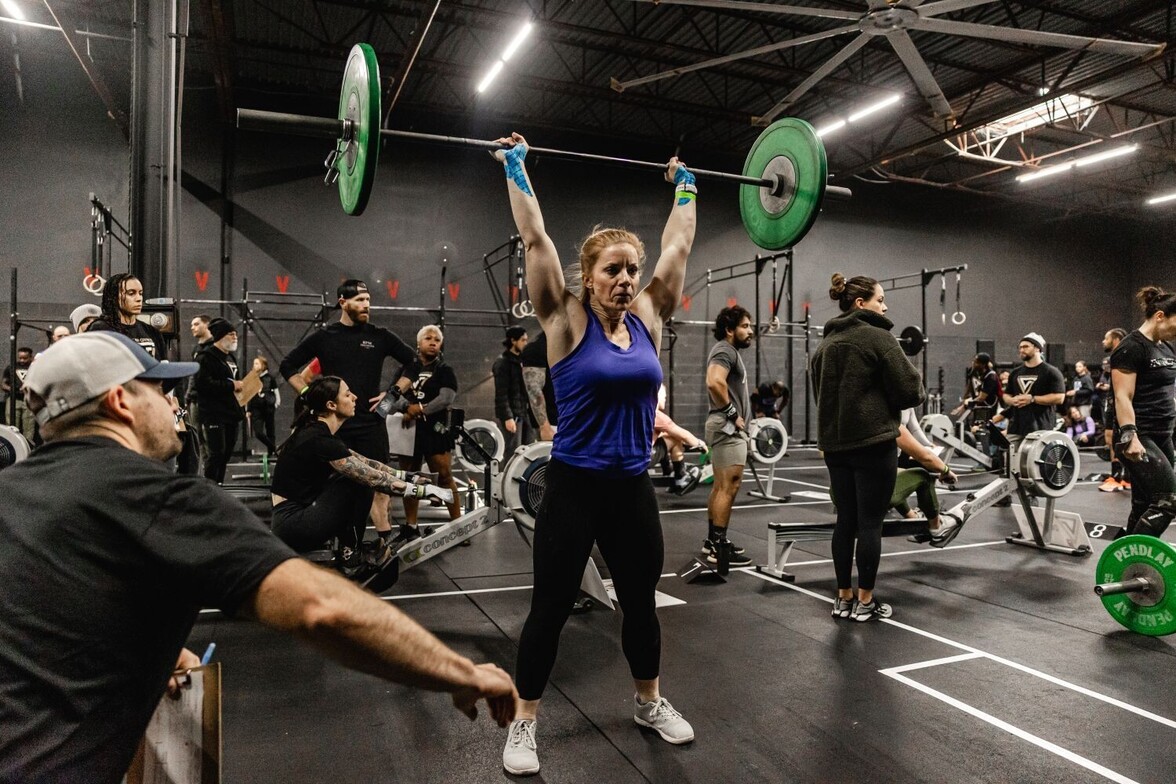
At Pack Performance PT, we're part of the next generation of physical therapists practicing with a fitness-forward mindset.
Performance Physical Therapy means we combine the progressive loading principles of strength and conditioning with the diagnostic assessment and therapeutic treatment of physical therapy to create a more comprehensive, long-term solution for you.
In other words: we don't just get you out of pain. We make you stronger, more resilient, and capable of handling whatever life throws at you.
The Problem with Traditional PT (PT 1.0)
PT 1.0 stops at treating pain because insurance considers your problem "solved" at that point.
However, if you've read my article on The I3 Model of Pain, you'll remember that pain is the last step in an injury process—and the first thing to go away during treatment.
You'll be pain-free much sooner than you're actually ready to get back to the activities you love.
Here's what traditional PT typically looks like:
- You're in pain → You start PT
- Pain goes away after a few weeks → Insurance says you're "fixed"
- You're discharged before addressing root causes
- You return to activity → Pain comes back
- Repeat the cycle
Sound familiar? This is the "doom loop" of pain → relief → pain → relief that keeps people stuck for years.
What Makes Performance PT Different?
At a performance PT clinic like Pack, we understand that building strength and tissue capacity takes time. Muscle hypertrophy (the process of adding new muscle to the body) requires months of consistent progressive overload. You can't rush this process!
On top of that, we need to address:
- Dysfunctional movement patterns - Retraining exercise technique and sport-specific movements
- Programming errors - Volume, intensity, and periodization mistakes that led to overtraining
- Strength imbalances - Building capacity in weak areas
- Lifestyle factors - Sleep, nutrition, stress, and daily movement habits
You might be thinking, "Well, I already have great technique and I'm strong AF!" Sometimes your training plan itself is to blame, not necessarily the movements individually. Because we understand programming, periodization, and intensity, we can identify training volume or programming errors to make sure you're not overtraining and simply asking too much from your body than it can handle.
The Lifestyle Factors Traditional PT Ignores
Just as important as movement, strength, and programming interventions, we need to address the lifestyle factors that contribute to your pain.
Injuries and pain rarely occur in isolation because of a singular movement fault or flexibility restriction.
How you eat, sleep, move, and manage stress on a daily basis adds to the complexity of your pain experience and directly influences your tissue's healing capacity.
Sadly, these lifestyle factors are not part of the typical physical therapy plan of care you'll find at most clinics. At Pack, we include comprehensive education on these factors specific to your pain and lifestyle history.
Here's the truth:
Exercise and manual therapy alone WILL NOT solve your pain if you don't create a foundation of daily health habits.
You cannot expect to heal if you:
- Eat a terrible diet
- Sleep 4 hours a night
- Sit in a chair all day
- Live in state of chronic stress
Your body needs the right environment to heal and adapt. We help you create that environment.
Understanding Capacity and Resilience
A performance physical therapy approach not only treats pain but increases the capacity of your tissues and builds long-term resilience.
Capacity = How much stress your tissues can handle before pain occurs
Resilience = How quickly you bounce back from an episode of pain
The better your capacity, the more stress and load your body can handle. The more resilient you are, the quicker you bounce back!
The Capacity vs. Load Model: A Visual Explanation
Here's an illustration I like to use with my patients:
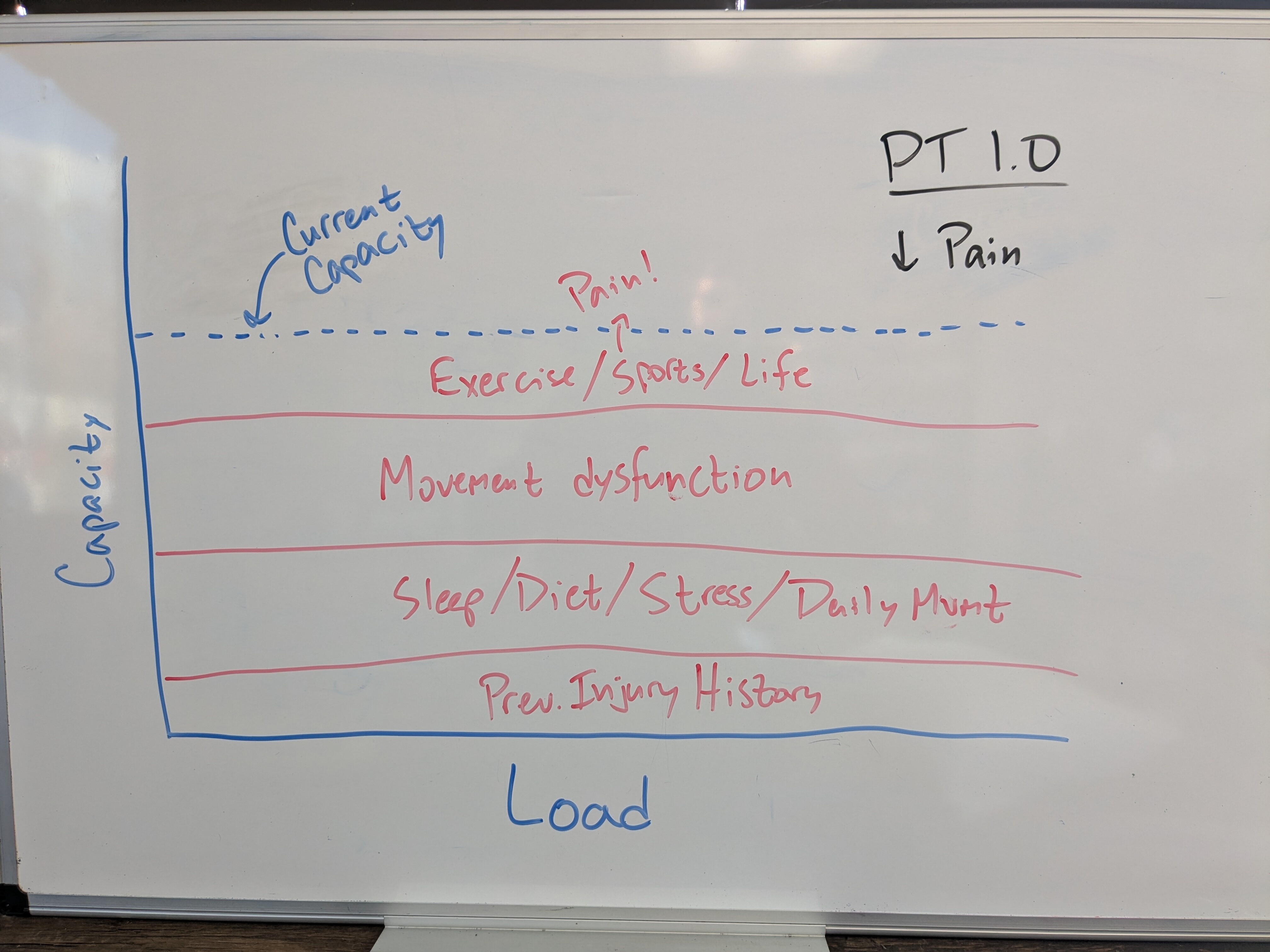
Understanding the Diagram:
The dotted line along the y-axis: Your body's current capacity—the amount of load your body can handle before experiencing injury or pain.
The red bars below: All of the "load" your body experiences daily. These include:
- Poor nutrition
- Inadequate sleep
- Sedentary lifestyle
- Chronic stress
- Movement dysfunction
- Training volume
- Life demands
The space between the red bars and the dotted line: The amount of load you can tolerate before you get hurt. This includes:
- CrossFit class
- Beer-league sports
- Hiking with your family
- Running a 5k
As you can see, your body can’t handle a whole lot before injuries happen.
What Happens When Life Gets Heavy:
If you're eating poorly, sleeping poorly, not moving, and stressed out, those red bars grow and your body tolerates even less load before an injury happens.
When you experience pain or an injury, PT 1.0 focuses on bringing your pain down below the dotted line. They might address some movement dysfunction, but look at how much daily load you're still experiencing!
Once pain is gone, you're discharged. Unfortunately, you haven't addressed the real reasons your body is in pain.
As I discuss in my article The Pain-Free Myth, "pain-free" is not the goal. Improving tissue capacity, reducing daily load, and building resilience is how we stay healthy, fit, and durable long-term.
What Performance PT Looks Like at Pack
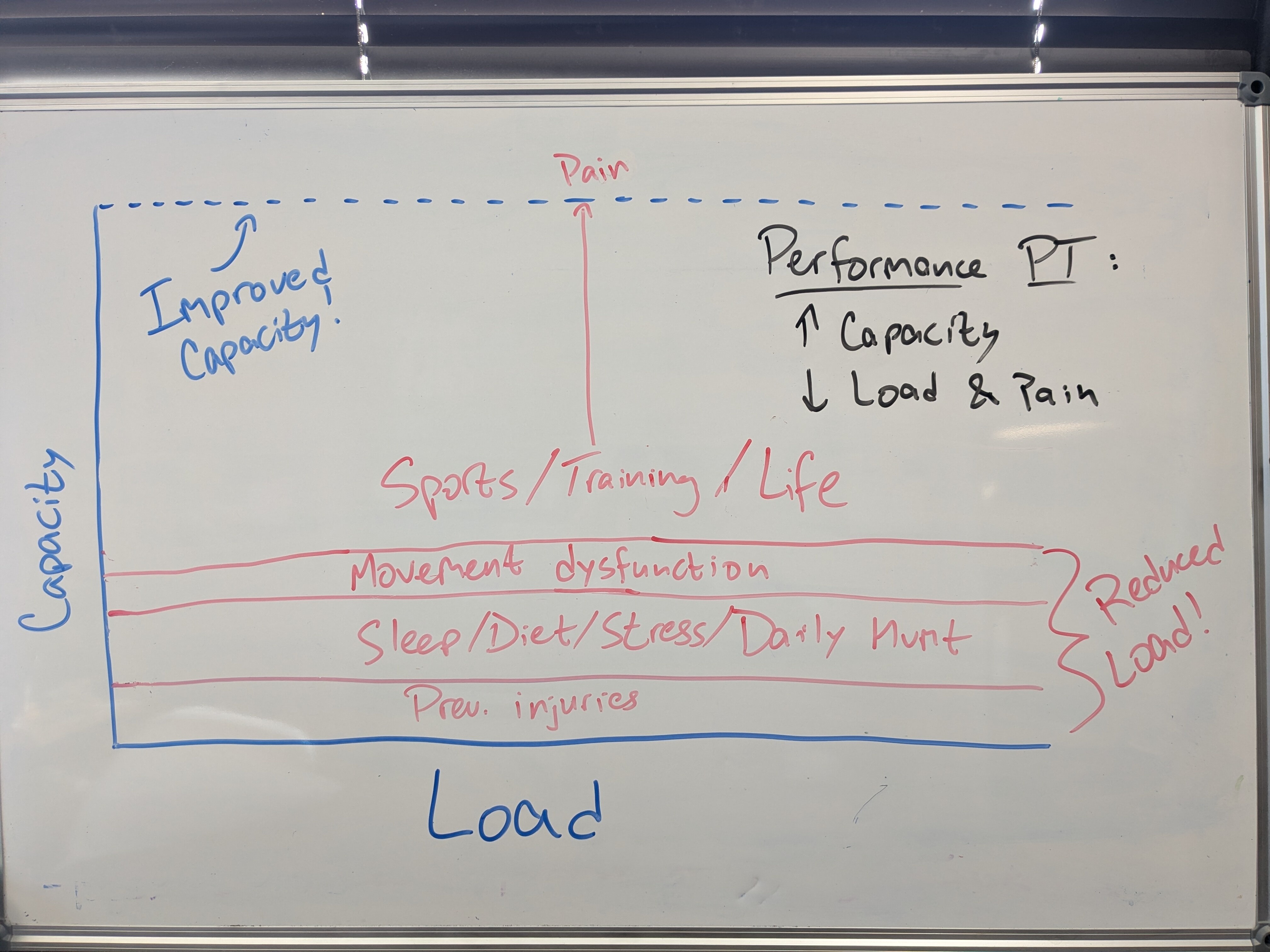
We Don't Just Treat Your Pain—We Build a Better You
Our 3-Step Process:
1. UNDERSTAND
- Identify ALL contributing factors (not just where it hurts)
- Understand your training history, goals, and lifestyle
- Create clarity around why you're in pain
2. RESTORE
- Eliminate pain with targeted interventions
- Address movement dysfunction
- Begin progressive strength training
- Begin to optimize lifestyle factors (sleep, nutrition, stress)
3. REBUILD
- Build tissue capacity beyond baseline
- Long-term resilience and load management
- Nutrition guidance and accountability
- Sleep optimization strategies
- Stress management techniques
- Daily movement habits
The Result:
This approach simultaneously lowers your daily load AND increases your body's capacity. This means you're able to handle significantly more stress before pain creeps back in.
You're a human, not a robot—everyone has a breaking point. But at Pack, our Performance PT approach allows us to temper your body so it bends before it breaks, and it takes a whole lot of force to even get to that point.
Ready to Experience Performance PT?
Stop settling for temporary pain relief. Build a body that can handle life's demands.Nobody should have to figure out their pain alone. When you join the Pack, you've got expert guidance and a supportive community at your back through the entire journey.
Schedule your free 15 minute phone consultation to talk with Dr. Matt and see how we can help!
Questions? Text us at 860-266-6287 or email dr.matt@packperformancept.com.
.jpg)
Matthew Szymanski
Contact Me