.jpg)
Last week, a patient of mine shared a reel she found on Instagram from a trendy orthopedic surgeon. Here's a snippet of the reel (direct quote):
"I repair shoulders for a living, and here's my least favorite exercise I see people doing that destroys their shoulders...overhead military press."
He then proceeded to demonstrate the movement with 10lb dumbbells and went on to describe his preferred exercise: a lateral raise to shoulder level with a light weight and slow lower.Everyone is entitled to their opinion on exercise and movement selection. We're going to unpack why the overhead press can actually help patients AVOID the very shoulder surgeries he performs. But first, I want to address the bigger issue I have with this statement.
The Real Problem: Fear-Mongering Movement
What bothers me more about this post isn't that he dislikes a fundamentally functional exercise (pretty sure we all need to be able to lift our arms over our heads, but what do I know). It's that he's fear-mongering exercise.
As a movement and fitness professional, I believe it's my duty to help people discover—or rediscover—the power movement has to heal and improve their quality of life.
When others in my field make statements like "this exercise is destroying your shoulders," they sow confusion and fear around something that, on the whole, is healthy, safe, and beneficial for your body—not dangerous. It's straight up irresponsible.
The Strength Training Crisis No One's Talking About
Here are some statistics for you number nerds:
According to the CDC:
- 60% of people do not strength train on a regular basis
- Only 30% of men and 27% of women report strength training twice a week
Some experts have an even more dismal view. During a roundtable discussion with industry-leading fitness and wellness experts, strength coach Mike Boyle suggested that the number of people routinely strength training to an adequate degree to maintain muscle mass is far lower.
According to statistics on gym memberships and attendance:
- Only 25% of Americans have a gym membership
- Up to 67% of those members don't use their memberships
Based on these numbers, Mike Boyle contends that the number of people actually performing meaningful strength training is less than 10% of people in the US—potentially as low as 5%
Let that sink in for a moment.
Muscle mass and strength are two of the strongest predictors of health and longevity we know. And up to 90% of people are not routinely training to maintain adequate muscle mass and strength.
Statements like this surgeon made only add to the decision many make: they would rather avoid musculoskeletal pain than regularly engage with an activity that allows them to maintain strength and independence into their later years.
What We Should Be Doing Instead
Instead of creating fear around exercise, we need to be encouraging people to move as much as possible, in as many ways as possible.
This means:
- Regular strength training
- Getting out of breath and sweaty
- Challenging yourself to get uncomfortable on a regular basis
Last I checked, no one was dying from patellar tendinopathy or shoulder impingement. Heart disease and diabetes are leading the way.
Instead of scaring people, let's educate them on the ideal starting point and give more options instead of fewer. Let's not spread fear, but instead provide hope that movement might be the thing they need to overcome pain they've been suffering with for years. Movement might be the thing that allows them to play on the floor with their kids. Movement might be the thing that gives them their life back.
At Pack Performance PT in Rocky Hill, CT, we provide graded exposure to movement in a way that's safe, productive, and challenging for our patients.The only exercise that's dangerous is the one you aren't prepared for. And that goes for the demands of your life as well.
We Fail at the Margins of Our Capacity
Here's a fundamental truth: Our body does not discriminate between exercise-induced load and the load from movements of daily living.
Let's use the shoulder press example from the orthopedic surgeon.
Our ancestors evolved to have mobile shoulders for reaching overhead to pick fruit out of trees. During the course of human evolution, our shoulders remained the most mobile joint in the body to allow us a large freedom of movement.
This means we're able to do things like:
- Put bags in the overhead bin of an airplane
- Work with our arms over our heads
- Lift objects onto high shelves
- Play with our kids
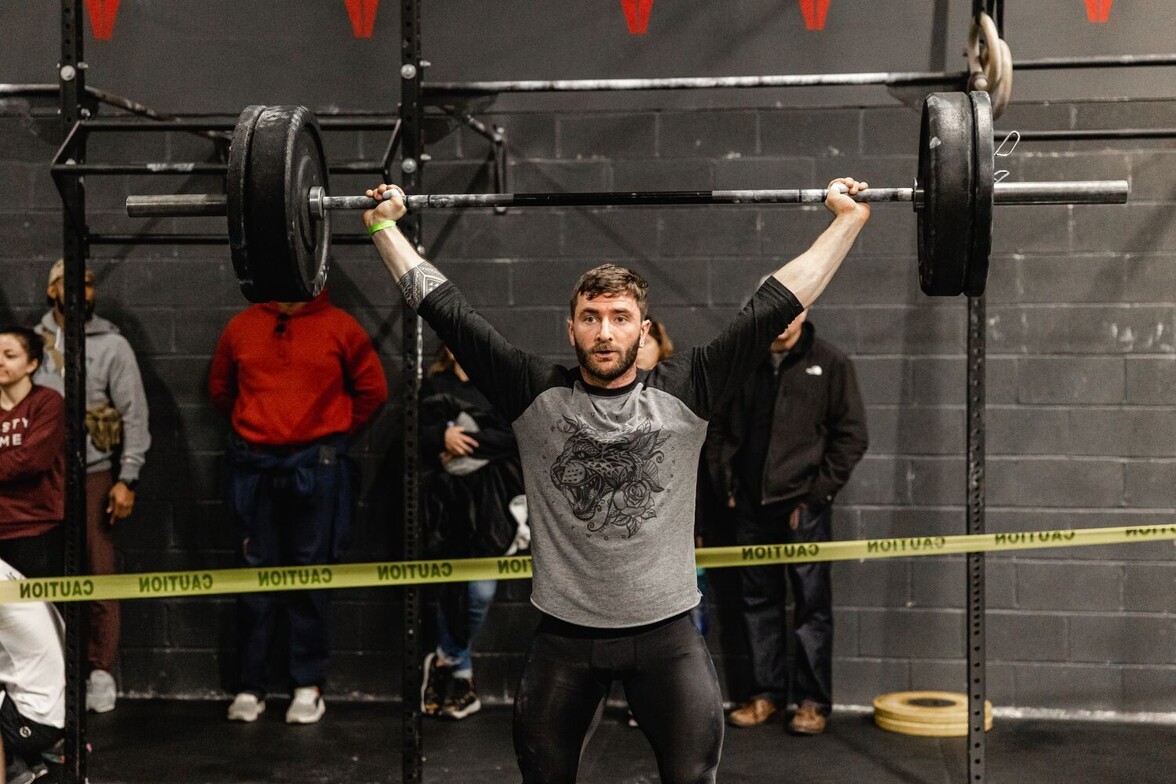
The purpose of strength training is to increase our tissue's capacity by intentionally stressing them in meaningful positions. Strong tissues are able to handle the demands of life better than weak tissues. It stands to reason that you're more likely to injure yourself performing a movement you don't have adequate strength for—in positions you don't regularly expose yourself to. This includes both putting a suitcase in an overhead bin AND performing a shoulder press exercise.
The Shoulder Press vs. Real Life: Which Is Actually Safer?
The forces our body experiences when putting a suitcase in an overhead bin compared to a shoulder press exercise are actually minimal.However, the difference becomes substantial and meaningful when you examine the intentionality.With the Shoulder Press:
- We control the implement (barbell, dumbbell, kettlebell, etc.)
- We control the tempo
- We control the range of motion
- We have full control over how we stress our tissues
With an understanding of your current strength, range of motion, and unique training history, we can create the optimal starting point for you to appropriately load your shoulders and progress over time.With consistent practice, you'll improve the strength and resilience in your muscles, bones, and connective tissue—making you less prone to injury.
Contrast the intetionality of the shoulder press with the circumstances of grabbing that suitcase from an overhead bin:
- Unpredictable weight
- Awkward angles
- Time pressure (people waiting behind you)
- Cramped space with poor positioning
- Often done when fatigued from travel
If the only time you put your arms overhead under load is in a circumstance like flying on an airplane, your shoulder does not adapt and respond to that load in a meaningful way.
How Adaptation Actually Works (The Science)
Adaptation from exercise takes weeks and months to see improvement:
- Early gains (weeks): The nervous system's ability to better coordinate and fire your muscles efficiently improves
- Long-term gains (months to years): Muscle size and strength improve substantially
Consistent strength training creates amazing adaptations in our body. But we also lose those gains very quickly if we don't maintain that input.
The "Use It or Lose It" Principle
Substantial atrophy in our muscles begins to occur only 5 days after disuse. That number comes from patients in a cast who were unable to perform any muscle function at all, but the bigger picture is this:
If our body doesn't have a use for the muscle, it quickly discards it.
With that muscle loss comes:
- Loss of strength
- Loss of tissue capacity
- Increased injury risk
The I3 Model Applies to Life, Not Just Exercise
As I talked about in my I3 Model of Pain article, incomplete mechanics result in small insults, which add up over time to create injury.
This applies to more than just exercise.
If you don't have adequate strength and capacity in your shoulder (incomplete mechanics), then activities like:
- Yanking your bag out of an overhead bin
- Tossing your kid in the air
- Working for long periods with your arms overhead
...will create insults that inevitably lead to injury at some point.
The Real Culprit Behind Shoulder Surgeries
Let's connect the dots:
- 60% of people don't strength train at all
- Only 10% (optimistically 30%) meet minimum strength training guidelines
- The majority of people are unprepared for overhead demands
So is it really the shoulder press exercise causing an epidemic of rotator cuff repairs?
Or is it actually the LACK of preparation that results in the orthopedic surgeries that have become so commonplace these days?Perhaps if we took the time to educate people that strength training in functional ways is actually the solution to pain—instead of something to be feared—we could spare people from needlessly going under the knife.
Is Your Body Prepared for the Demands You Ask of It?
If you're in the majority of people, you're probably not going to like the answer.
At Pack Performance PT in Rocky Hill, Connecticut, we don't judge where you're starting from. We recognize that everyone comes with unique history, beliefs, and expectations about their body.
Here's what we do:
- Find your appropriate starting point based on your current capacity
- Provide structured guidance with progressions tailored to your body
- Build the capacity and resilience required to handle whatever physical challenges come your way
- Teach you to trust your body and not fear movement
Most of all, we help active adults and athletes in Rocky Hill and Central Connecticut build strength safely—without the confusion and fear spread by viral fitness content.
Movement is medicine. Movement is freedom.
Ready to Build Real Shoulder Strength?
Stop letting fear-mongering keep you weak and vulnerable to injury. At Pack Performance PT, we'll help you build the strength and capacity your body needs to handle real life.Schedule a consultation and let's assess where you're starting from and create a plan to get you strong, resilient, and confident.
Questions? Text us at 860-266-6287 or email dr.matt@packperformancept.com.
The Bottom Line
The overhead press won't destroy your shoulders.
But avoiding it—and all forms of meaningful strength training—just might set you up for the very surgeries that surgeon performs.
Don't let viral fitness content make you weaker. Get stronger, build capacity, and trust your body to handle what life throws at you.
Pack Performance Physical Therapy – Serving active adults and athletes in Rocky Hill, CT and Central Connecticut.
Sources:
1. Ltd TE. Gym usage and attendance statistics: Insights and Trends. GymMaster Gym Management Software. Accessed February 3, 2026. https://www.gymmaster.com/blog/gym-usage-and-attendance-statistics-insights-and-trends/#:~:text=In%20terms%20of%20how%20regularly,15%25%20attend%20once%20a%20week.
2. QuickStats: Percentage of Adults Aged ≥18 Years Who Met the Federal Guidelines for Muscle-Strengthening Physical Activity,† by Age Group and Sex — National Health Interview Survey, United States, 2020§. MMWR Morb Mortal Wkly Rep 2022;71:642. DOI: http://dx.doi.org/10.15585/mmwr.mm7118a6.
3. Wall BT, Dirks ML, Snijders T, Senden JM, Dolmans J, van Loon LJ. Substantial skeletal muscle loss occurs during only 5 days of disuse. Acta Physiol (Oxf). 2014 Mar;210(3):600-11. doi: 10.1111/apha.12190. Epub 2013 Dec 5. PMID: 24168489.
.jpg)
Matthew Szymanski
Contact Me